How to Take Care of Cat Dandruff | Simple Steps for Healthy, Flake-Free Fur
Seeing white flakes on your cat’s fur can be worrying. Cat dandruff (often called “dander flakes”) is common, but it’s a signal that your cat’s skin barrier needs attention. The good news: with the right grooming, nutrition, and environment, most mild cases improve naturally at home.
This guide explains why cat dandruff happens, how to fix it step by step, and when to involve your veterinarian—using advice aligned with leading animal health authorities.
What Is Cat Dandruff?
Cat dandruff is the shedding of visible, dry skin flakes from the coat. It’s usually linked to Seborrhea—a scaling disorder that may be dry (seborrhea sicca) or oily (seborrhea oleosa). Dandruff itself is not a disease; it’s a symptom of an underlying imbalance.
Common Causes of Dandruff in Cats:
- Dry air and dehydration
- Poor grooming (common in overweight or elderly cats)
- Low-quality diet lacking omega-3 fats
- Skin parasites like Cheyletiellosis (“walking dandruff”)
- Allergies (food or environmental)
- Stress or illness affecting skin health
- Obesity preventing proper self-grooming
Guidance from the American Veterinary Medical Association and the ASPCA emphasizes checking diet, hydration, grooming, and parasites first.
How to Take Care of Cat Dandruff | Simple Steps for Healthy, Flake-Free Fur:
Step 1: Brush Your Cat Regularly (Most Important)
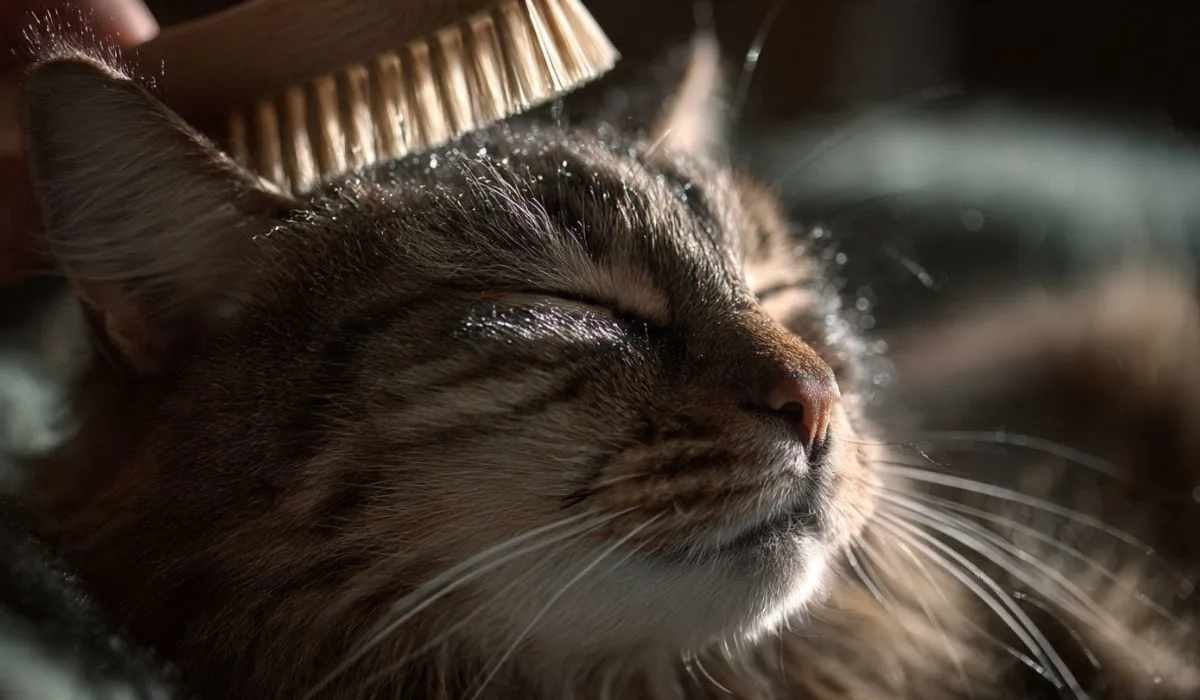
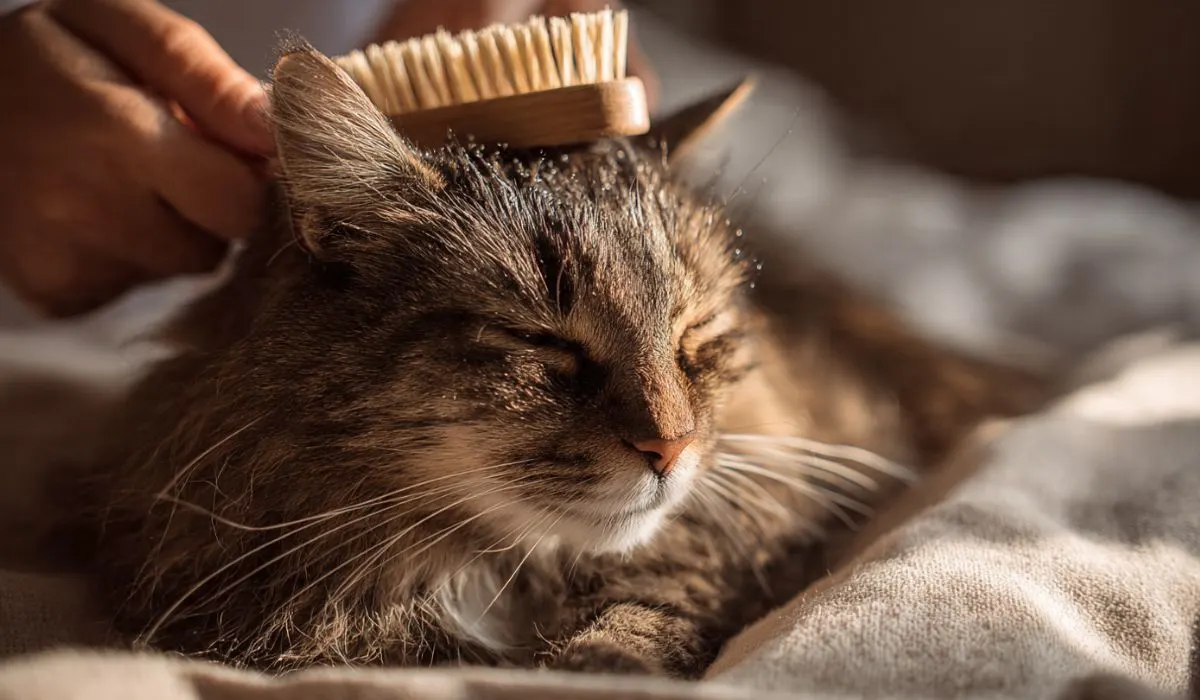
Brushing removes flakes, spreads natural oils, and stimulates skin circulation.
How
- Use a soft bristle brush for short hair
- Use a slicker or de-shedding brush for long hair
- Brush 3–4 times weekly (daily for long-haired cats)
This alone often reduces visible dandruff within days.
Step 2: Improve Hydration
Dry skin is often a hydration issue.
What to do
- Provide fresh water in multiple bowls
- Consider a cat water fountain (encourages drinking)
- Add a little water to wet food
Well-hydrated cats have healthier skin and fewer flakes.
Step 3: Upgrade Diet with Omega-3 Fatty Acids
Skin health starts with nutrition.
Add (vet-approved)
- Fish oil (omega-3 EPA/DHA)
- High-quality wet food with animal protein
- Avoid low-quality fillers
Omega-3s reduce inflammation and improve skin moisture.
Step 4: Use a Humidifier in Dry Weather
Indoor heating or AC dries the air.
- Place a humidifier where your cat rests
- Aim for comfortable indoor humidity (around 40–50%)
This helps prevent dry, flaky skin.
Read Next: How to Take Care of Dandruff Hair | Easy Daily Routine
Step 5: Gentle Wipe-Down Instead of Frequent Baths
Cats rarely need baths. Over-bathing worsens dandruff.
Instead
- Use a damp, soft cloth to wipe the coat weekly
- Removes flakes without stripping oils
Bathe only if advised by a vet.
Step 6: Check for Parasites (“Walking Dandruff”)
If flakes seem to move or itching is intense, suspect Cheyletiellosis.
Signs
- Excessive scratching
- Flakes concentrated along the back
- Restlessness
This requires vet treatment.
Step 7: Help Overweight or Senior Cats Groom
Cats that can’t reach their back develop dandruff there.
- Brush these areas gently
- Maintain healthy weight through portion control and play
Step 8: Reduce Stress
Stress affects skin and shedding.
- Provide a quiet resting space
- Keep routine feeding times
- Offer enrichment toys and play
Step 9: Use Vet-Approved Skin Sprays (If Needed)
If flakes persist, vets may suggest moisturizing sprays or medicated shampoos safe for cats. Follow professional guidance—never use human products.
Effective Tips That Make a Big Difference:
- Wash bedding weekly
- Keep litter area clean (dust can irritate skin)
- Avoid scented room sprays near cats
- Ensure balanced nutrition year-round
- Groom more during seasonal shedding
When Dandruff Signals a Health Problem:
Consult a vet if you notice:
- Redness, sores, or scabs
- Hair loss with flakes
- Persistent itching
- Greasy, smelly coat
- Lethargy or appetite changes
These may indicate allergies, infections, or systemic illness associated with Seborrhea.
What Veterinary Authorities Recommend:
Advice consistent with the American Veterinary Medical Association and ASPCA:
- Prioritize grooming and hydration
- Improve diet quality before topical treatments
- Avoid over-bathing
- Rule out parasites and allergies
- Seek vet care if symptoms persist beyond 2–3 weeks
Weekly Care Routine for a Flake-Free Coat:
| Day | Care Task |
|---|---|
| Monday | Full brushing session |
| Wednesday | Damp cloth wipe-down |
| Friday | Brushing + check skin condition |
| Sunday | Wash bedding, refresh water stations |
Mistakes to Avoid:
- Bathing cats frequently
- Using human dandruff shampoos
- Ignoring hydration
- Feeding poor-quality dry food only
- Skipping grooming for long-haired cats
Benefits of Proper Dandruff Care:
- Shinier, softer coat
- Less shedding and itching
- Better comfort for your cat
- Early detection of skin issues
- Stronger bond through grooming
FAQs:
1. Is cat dandruff normal?
Mild flakes can be seasonal, but persistent dandruff needs attention.
2. Can I use coconut oil on my cat’s skin?
Only in tiny amounts and with vet approval. Cats groom themselves and may ingest it.
3. How often should I brush my cat?
3–4 times weekly; daily for long hair.
4. Do cats need baths for dandruff?
Rarely. Over-bathing worsens dry skin.
5. Can diet really fix dandruff?
Yes. Omega-3 fats and hydration significantly improve skin health.
6. What is walking dandruff?
A mite infestation called Cheyletiellosis that needs vet treatment.
7. When should I see a vet?
If flakes persist beyond 2–3 weeks or are paired with itching, redness, or hair loss.