
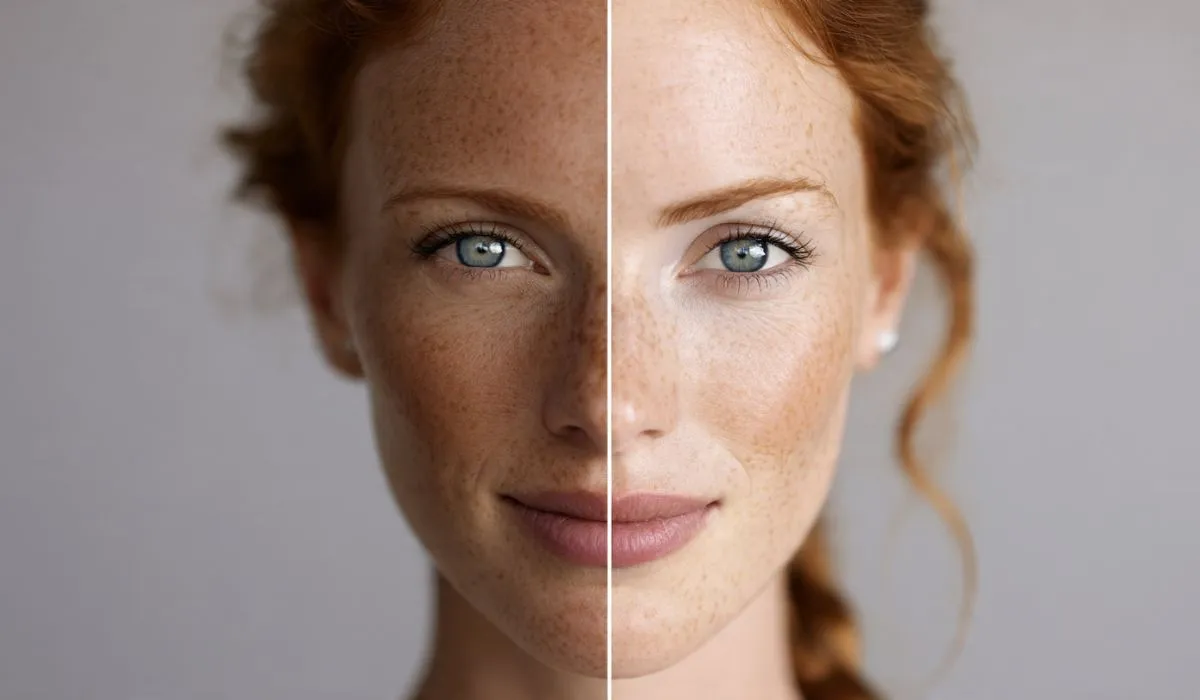
Fair Skin vs Light Skin | What’s the Real Difference?
In everyday conversation, people often use the terms fair skin and light skin as if they mean the same thing. In beauty marketing, social media, and even casual compliments, these phrases are thrown around without much clarity. But are they actually the same? Not quite.
Understanding the difference between fair skin and light skin isn’t just about language. It helps you choose the right skincare, makeup shades, sun protection, and set realistic expectations about your natural complexion.
This guide explains the true meaning of Fair Skin vs Light Skin using dermatology, undertone science, and practical beauty knowledge.
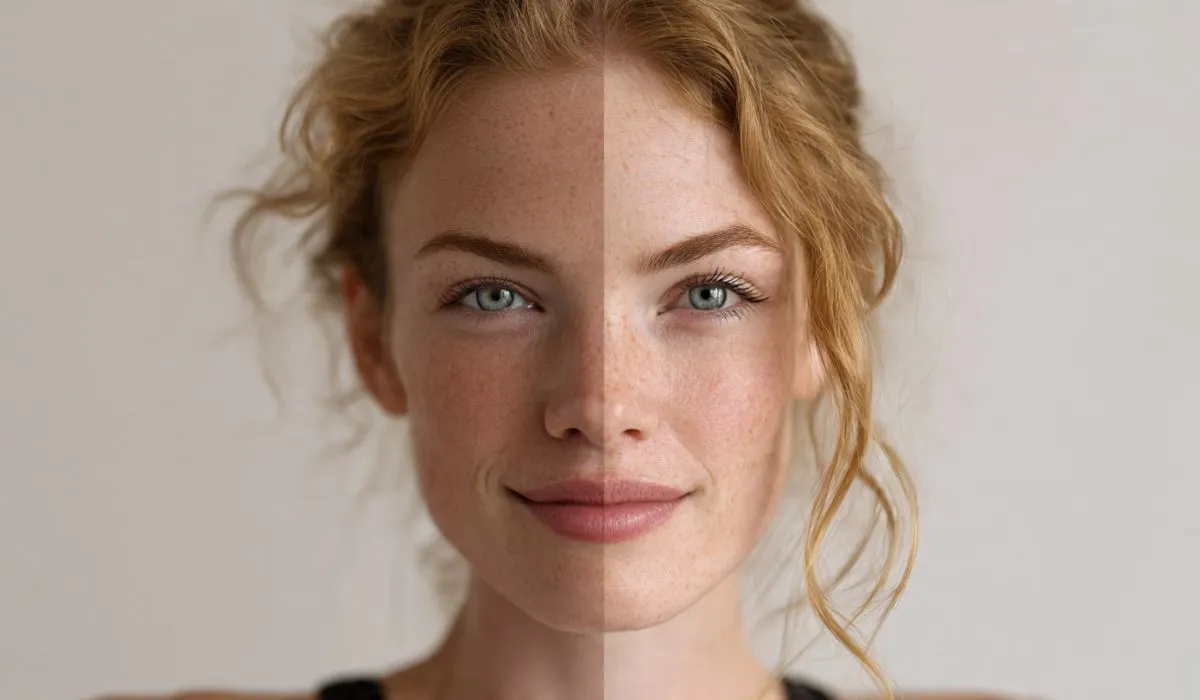
What Is Light Skin?
Light skin refers to a skin tone category. It describes how much melanin your skin has compared to medium, tan, or dark complexions.
Dermatologists often use the Fitzpatrick skin type to classify skin by how it reacts to sunlight. People with light skin usually fall into:
- Type II
- Type III
Characteristics of Light Skin
- Contains low to moderate melanin
- May tan slowly
- May burn before tanning
- Found across many ethnicities
- Can have warm, cool, or neutral undertones
- May appear beige, ivory, or light brown
Light skin is a biological description. It says nothing about glow, clarity, or texture.
What Is Fair Skin?
Fair skin is often misunderstood. It does not strictly describe melanin level. Instead, it refers to a visual appearance of the skin.
Fair skin typically means:
- Very pale or milky complexion
- Highly reflective, bright appearance
- Often cool or pink undertones
- Burns very easily in the sun
- Minimal visible pigmentation
Most people with fair skin fall into:
- Type I
- Type II on the Fitzpatrick scale
Characteristics of Fair Skin
- Very low melanin
- Pinkish or porcelain look
- Highly sensitive to sunlight
- Rarely tans
- Shows redness easily
Fair skin is more about how the skin looks, not just how much melanin it contains.
Read Next: Why Should I Use Sunscreen at Home | Indoor
Key Difference Between Fair Skin and Light Skin:
| Feature | Fair Skin | Light Skin |
|---|---|---|
| Meaning | Visual paleness and brightness | Melanin-based tone category |
| Melanin level | Very low | Low to moderate |
| Undertone | Usually cool/pink | Warm, cool, or neutral |
| Sun reaction | Burns almost always | May burn, may tan |
| Appearance | Porcelain, milky | Beige, ivory, light brown |
| Sensitivity | Very high | Moderate |
In simple terms:
All fair skin is light skin, but not all light skin is fair skin.
Undertones: The Hidden Factor:
Two people can both be “light-skinned,” yet one looks fair and the other does not. The reason is undertone.
1. Cool Undertone (Often Looks Fair)
- Pink, red, or bluish tint
- Veins appear blue
- Silver jewelry looks better
2. Warm Undertone (Looks Light but Not Fair)
- Yellow, peach, or golden tint
- Veins appear green
- Gold jewelry looks better
3. Neutral Undertone
- Mix of both
Fairness is strongly linked to cool undertones and high light reflection from the skin surface.
Why People Confuse These Terms:
Beauty advertising and social media filters blur the line between fair and light. Many products promise “fairness,” but what they often do is:
- Brighten dull skin
- Reduce tanning
- Even out pigmentation
- Increase glow
They do not change your natural melanin level.
This confusion is common in markets influenced by brands like Unilever, which popularized the term “fairness” in skincare marketing for decades.
Skin Brightness vs Skin Tone:
You can have light skin that looks dull.
You can have medium skin that looks bright and radiant.
Brightness depends on:
- Hydration
- Exfoliation
- Blood circulation
- Healthy skin barrier
Tone depends on melanin genetics.
How Sun Exposure Affects Fair and Light Skin:
Ultraviolet radiation from the sun, as documented by World Health Organization, triggers melanin production.
- Fair skin: burns quickly, little tanning
- Light skin: may tan gradually after burning
This is why sunscreen is essential for both, but especially for fair skin.
Makeup Shades: Why This Difference Matters:
Choosing foundation based only on “fair” or “light” leads to mismatch.
- Fair skin needs shades labeled porcelain, ivory, cool fair
- Light skin may need beige, warm ivory, light sand
Understanding undertone prevents the gray or orange look.
Skincare Needs: Fair vs Light:
Fair Skin Needs
- Strong SPF protection
- Anti-redness care
- Gentle products for sensitivity
- Barrier-repair moisturizers
Light Skin Needs
- Pigmentation control
- Tan removal
- Brightening ingredients like vitamin C
- Regular exfoliation
Common Myths:
Myth 1: Fair skin is healthier
Not true. Health is about texture, hydration, and barrier strength.
Myth 2: You can become fair with creams
You can brighten skin, but you cannot change genetics.
Myth 3: Light skin and fair skin are identical
They overlap but are not the same.
Ethnicity and Skin Tone:
Light skin appears in many populations across Asia, Europe, and the Americas. Fair skin is more common in regions with lower historical UV exposure, but undertone variation exists everywhere.
How to Tell If You’re Fair or Light:
Ask yourself:
- Do you burn within 10 minutes in the sun? → Likely fair
- Do you tan slightly after burning? → Likely light
- Does your skin look pink/porcelain? → Fair
- Does it look beige/yellow/peach? → Light
Practical Care Tips:
For Fair Skin
- SPF 50 daily
- Avoid harsh exfoliation
- Use calming ingredients (aloe, ceramides)
- Patch test new products
For Light Skin
- Use vitamin C serums
- Weekly exfoliation
- Tan protection with SPF 30+
- Hydrating routine for glow
Social Perception vs Science:
In many cultures, “fair” is treated as a beauty standard. Scientifically, it is simply a skin characteristic. Modern dermatology encourages skin health over skin color.
Final Thoughts:
Fair skin and light skin are related but different concepts. Fairness describes appearance and undertone, while light skin describes melanin level. Knowing this difference helps you choose the right skincare, makeup, and sun protection—and avoid falling for misleading beauty claims.
Your goal should never be to become “fair,” but to make your natural skin tone look healthy, even, and radiant.