
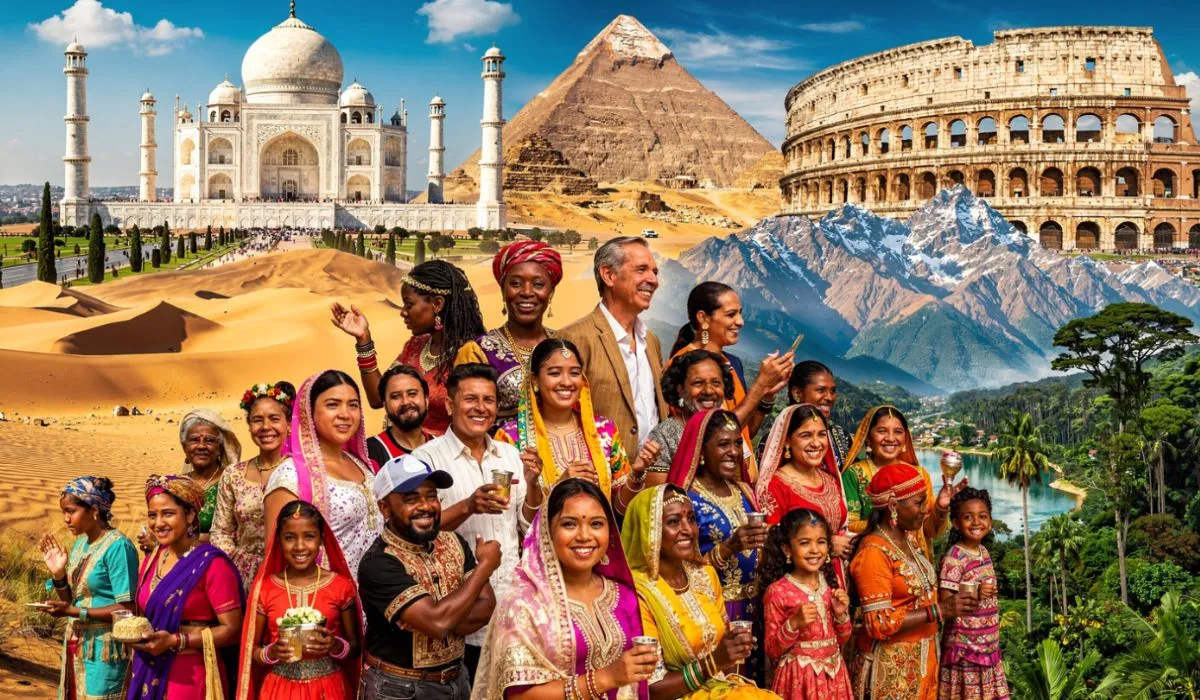
Light Brown Skin Countries | Where This Beautiful Skin Tone Is Common and Why
Light brown skin is one of the most widely seen natural skin tones in the world. It sits between fair and deep brown on the spectrum and is especially common in regions with warm climates, strong sunlight, and long histories of human migration and genetic mixing.
This skin tone is not limited to one race, religion, or continent. Instead, it appears across South Asia, the Middle East, North Africa, Latin America, Southeast Asia, and parts of Africa. Geography, climate, ancestry, and evolution all play a role in why light brown skin is so common in these areas.
In this guide, you’ll explore Light Brown Skin Countries, the science behind it, and how history and environment shaped this global pattern.
The Science Behind Light Brown Skin:
Human skin color is primarily determined by melanin, a pigment produced by melanocyte cells. The amount and type of melanin your body produces depends largely on how your ancestors adapted to ultraviolet (UV) radiation from the sun.
- Regions with high UV exposure → people evolved more melanin for protection
- Regions with low UV exposure → people evolved less melanin to absorb vitamin D
Light brown skin represents a balanced adaptation: enough melanin to protect against strong sun, but not so much that vitamin D production is limited.
This is why you see light brown skin concentrated in countries near the equator and in subtropical zones.
South Asia: A Major Region of Light Brown Skin:
🇮🇳 India
India has one of the widest skin tone ranges in the world, but light brown skin is extremely common, especially in central, western, and southern regions. High sun exposure and diverse ancestry contribute to this.
🇧🇩 Bangladesh
The majority of people have light brown to medium brown skin due to tropical climate, humidity, and strong sunlight year-round.
🇵🇰 Pakistan
From Punjab to Sindh, light brown skin is widely seen, influenced by both South Asian and Middle Eastern ancestry.
🇱🇰 Sri Lanka
Tropical climate and coastal geography make light brown skin very common.
🇳🇵 Nepal
Especially in the lower plains (Terai region), light brown skin is prevalent.
Middle East: Sun-Adapted Skin Tones:
🇸🇦 Saudi Arabia
Desert sun and heat have led to predominantly light brown complexions.
🇦🇪 United Arab Emirates
Native Emiratis often have light brown skin adapted to desert conditions.
🇾🇪 Yemen
Strong UV exposure and ancient trade routes shaped common light brown tones.
🇮🇶 Iraq
A mix of Middle Eastern and Mediterranean ancestry results in many light brown complexions.
🇮🇷 Iran
From Persian to Kurdish populations, light brown skin is widespread.
North Africa: Where Africa Meets the Mediterranean:
🇪🇬 Egypt
Ancient Nile civilizations developed under intense sun, leading to common light brown tones.
🇲🇦 Morocco
Berber, Arab, and Mediterranean mixing created a wide range, with light brown very common.
🇩🇿 Algeria
Similar to Morocco in climate and ancestry.
🇹🇳 Tunisia
Mediterranean sun exposure with African roots.
Southeast Asia: Tropical Influence:
🇹🇭 Thailand
Tropical climate leads to light brown complexions across the population.
🇵🇭 Philippines
Austronesian ancestry and equatorial sun create light brown skin tones.
🇲🇾 Malaysia
Malay populations commonly have light brown skin.
🇮🇩 Indonesia
Thousands of islands near the equator make light brown skin very common.
Rea Next: Best Cream For Hyperpigmentation
Latin America: A Blend of Ancestries:
🇲🇽 Mexico
Indigenous, European, and African mixing led to widespread light brown tones.
🇧🇷 Brazil
Extremely diverse, but light brown skin is very common.
🇵🇪 Peru
Indigenous ancestry under strong sun exposure.
🇨🇴 Colombia
Tropical sun and mixed ancestry.
Parts of Sub-Saharan Africa:
🇪🇹 Ethiopia
Many Ethiopians have light brown to medium brown tones distinct from West African complexions.
🇸🇴 Somalia
Horn of Africa populations often show lighter brown shades.
🇪🇷 Eritrea
Similar climate and ancestry patterns.
Why These Regions Share This Skin Tone:
Several shared factors explain the pattern:
- Proximity to the equator
- High UV radiation year-round
- Long-term genetic adaptation
- Historical trade routes and migration
- Hot, humid, or desert climates
Light brown skin is essentially an evolutionary success in these environments.
Cultural Diversity, Same Skin Spectrum:
Even within one country, skin tones vary widely. Light brown skin appears across different ethnicities, languages, and cultures, proving that skin color is about adaptation—not identity.
Skincare Considerations for Light Brown Skin:
People with light brown skin may be more prone to:
- Tanning
- Hyperpigmentation
- Uneven tone from friction or inflammation
Daily sunscreen, gentle skincare, and avoiding harsh treatments help maintain even tone.
Last Call:
Light brown skin is one of the most globally shared and naturally adaptive skin tones. From South Asia to Latin America, the Middle East to Southeast Asia, millions of people share this complexion because of climate, evolution, and history.
It’s a reminder that skin color is a story of human survival, movement, and diversity across the planet.
FAQs:
Is light brown skin a race?
No. It appears across many races and ethnicities worldwide.
Why is it common in hot countries?
Because melanin protects against strong UV radiation.
Can people from cold countries have light brown skin?
Yes, due to ancestry and migration.
Does light brown skin tan easily?
Yes. It has active melanin response.
Is this skin tone healthier?
It offers natural UV protection but still needs sunscreen.