
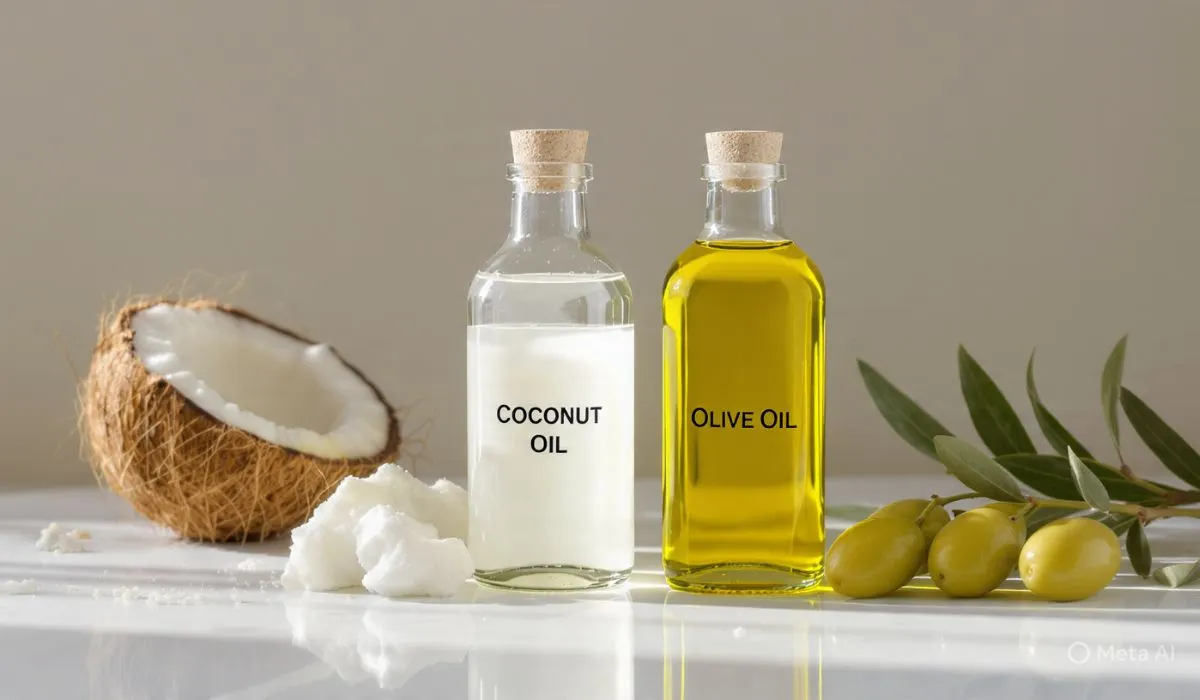
Coconut Oil or Olive Oil Which Is Best For Skin Whitening | Which Is Better for Skin Brightening and Even Tone?
Skin care discussions often include natural oils like coconut oil and olive oil as home remedies for glowing skin.
Many people search for which one is better for “skin whitening,” but it’s important to be clear from the start: no oil can truly change your natural skin color or “whiten” skin. What these oils can do—based on research and dermatology understanding—is improve hydration, reduce dryness, support the skin barrier, and help the skin look healthier, smoother, and more even-toned.
Instead of skin whitening, the scientifically accurate goal is skin brightening and tone improvement, meaning reducing dullness, dryness, and uneven pigmentation. Let’s break down coconut oil and olive oil in detail to see how each performs.
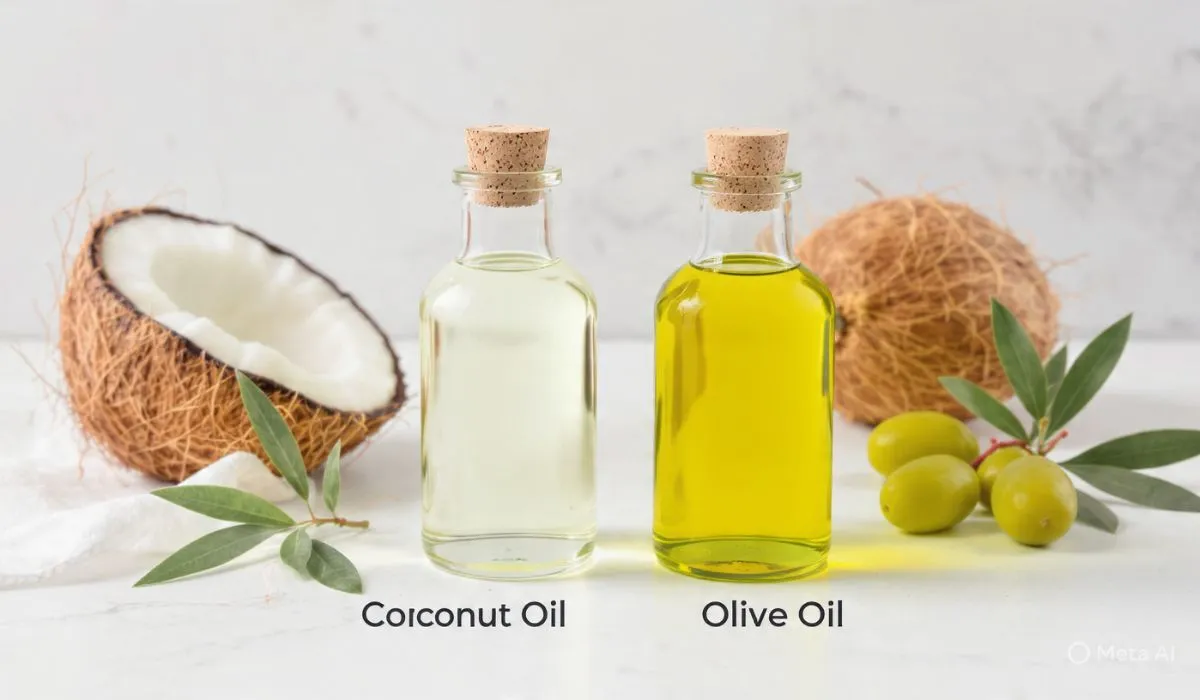
What “Skin Brightening” Really Means:
Skin Tone vs Skin Health
Skin color is determined mainly by melanin, which is genetically controlled. No natural oil can safely or permanently reduce melanin production in healthy skin. However, skin can appear darker or dull due to:
- Dryness and dehydration
- Sun damage
- Inflammation
- Dead skin buildup
- Uneven texture
When skin is well-moisturized and healthy, it naturally appears brighter and more radiant.
Role of Natural Oils in Skin Appearance
Natural oils mainly help by:
- Locking in moisture
- Supporting the skin barrier
- Reducing flakiness
- Improving smoothness and glow
This is where coconut oil and olive oil come into play.
Coconut Oil for Skin: Benefits and Limitations:
What Coconut Oil Contains
Coconut oil is rich in:
- Lauric acid
- Fatty acids
- Vitamin E (small amounts)
- Antimicrobial compounds
These components give it moisturizing and protective properties.
Skin Benefits of Coconut Oil
Deep Moisturization
Coconut oil is highly occlusive, meaning it forms a protective layer on the skin that prevents water loss. This can make dry skin feel softer and smoother quickly.
Antibacterial Properties
Lauric acid in coconut oil has mild antibacterial activity, which may help reduce certain surface bacteria.
Improving Skin Texture
Regular use on dry areas like elbows, knees, or rough patches can improve texture and reduce flakiness.
Limitations of Coconut Oil
Not Suitable for All Skin Types
Coconut oil is considered comedogenic (pore-clogging) for many people. This means it may worsen:
- Acne-prone skin
- Oily skin
- Sensitive facial skin
No Direct Skin Lightening Effect
There is no scientific evidence that coconut oil reduces pigmentation or lightens skin tone.
Olive Oil for Skin: Benefits and Limitations:
What Olive Oil Contains
Olive oil is rich in:
- Oleic acid
- Linoleic acid
- Polyphenols
- Vitamin E
These compounds give it strong antioxidant properties.
Skin Benefits of Olive Oil
Powerful Antioxidant Protection
Olive oil contains antioxidants that help fight oxidative stress caused by pollution and UV exposure. This can help prevent premature aging.
Deep Nourishment
It penetrates the skin more deeply than coconut oil and provides long-lasting hydration for dry skin types.
Supports Skin Barrier
Olive oil can help strengthen the lipid barrier, especially in very dry or mature skin.
Limitations of Olive Oil
May Disrupt Skin Barrier in Some Cases
Some studies suggest olive oil’s high oleic acid content can disrupt the skin barrier in sensitive individuals if used frequently.
Heavy Texture
It can feel greasy and may not suit oily or acne-prone skin.
No Whitening Effect
Like coconut oil, olive oil does not lighten skin or reduce melanin production.
Coconut Oil vs Olive Oil: Which Is Better?
For Dry Skin
- Coconut oil: Good for surface dryness but may feel heavy
- Olive oil: Better for deep nourishment and long-term hydration
✔ Winner: Olive oil (for most dry skin types)
For Oily or Acne-Prone Skin
- Coconut oil: Likely to clog pores
- Olive oil: Less comedogenic but still heavy
✔ Winner: Neither is ideal (lightweight moisturizers are better)
For Skin Brightness and Glow
- Coconut oil: Improves smoothness but not tone
- Olive oil: Antioxidants may improve dullness over time
✔ Winner: Olive oil (slightly better for radiance)
For Sensitive Skin
- Coconut oil: May irritate some people
- Olive oil: Can also irritate if barrier is weak
✔ Winner: Depends on individual tolerance
Read Next: Skin Care Research Articles | The Rise of Evidence-Based
What Dermatology Research Suggests:
Organizations like the American Academy of Dermatology emphasize that natural oils can support moisturization but should not replace scientifically tested skincare ingredients like sunscreen, ceramides, or retinoids.
Research published in journals such as the Journal of Investigative Dermatology shows that skin brightness is more strongly linked to:
- Sun protection
- Regular exfoliation (safe and moderate)
- Barrier repair
- Anti-inflammatory care
Natural oils are supportive but not corrective for pigmentation disorders.
Common Myths About Skin Whitening with Oils:
Myth 1: Coconut Oil Makes Skin Fair
Reality: Coconut oil moisturizes but does not change melanin levels.
Myth 2: Olive Oil Removes Dark Spots
Reality: Olive oil may improve skin texture, but it does not clinically remove pigmentation.
Myth 3: Natural Oils Are Always Safe for Everyone
Reality: Both oils can clog pores or cause irritation depending on skin type.
Better Alternatives for Skin Brightening (Scientifically Proven):
If your goal is truly brighter and more even-toned skin, research supports these ingredients:
Vitamin C
- Reduces dullness
- Helps fade pigmentation
- Boosts collagen
Niacinamide
- Evens skin tone
- Reduces inflammation
- Strengthens barrier
Sunscreen
Recommended daily by the Skin Cancer Foundation, sunscreen is the most important product for preventing dark spots and uneven skin tone.
Retinoids
Studied extensively by the National Institutes of Health, retinoids help increase cell turnover and improve overall skin texture.
How to Use Coconut Oil or Olive Oil Safely:
Patch Test First
Apply a small amount on the wrist or jawline and wait 24 hours.
Use on Body, Not Always Face
They are generally safer for:
- Hands
- Legs
- Elbows
- Feet
Avoid Overuse
Using too much oil can clog pores and make skin feel greasy.
Mix With Moisturizer
Instead of applying directly, a few drops can be mixed into a moisturizer for better balance.
Final Verdict: Which Is Better?
When comparing coconut oil vs olive oil for skin brightening:
- Coconut oil is better for short-term softness and dry patches
- Olive oil is better for nourishment and antioxidant support
However, neither oil can “whiten” skin or significantly change skin tone.
The Real Answer
For healthier, brighter skin, the most effective approach is:
- Daily sunscreen
- Gentle cleansing
- Hydration (moisturizer, not just oil)
- Evidence-based ingredients like vitamin C and niacinamide
Natural oils can support skin care, but they are not miracle solutions.
Last Call:
Coconut oil and olive oil both have valuable moisturizing properties, but they serve different roles in skin care. Coconut oil is more occlusive and works best for very dry areas, while olive oil provides deeper nourishment and antioxidant benefits. However, neither oil can alter skin pigmentation or provide true skin whitening effects.
Modern dermatology clearly shows that skin brightness comes from healthy skin function, not color change. With consistent care, sun protection, and scientifically proven ingredients, skin naturally becomes more radiant, even-toned, and healthy-looking over time.