
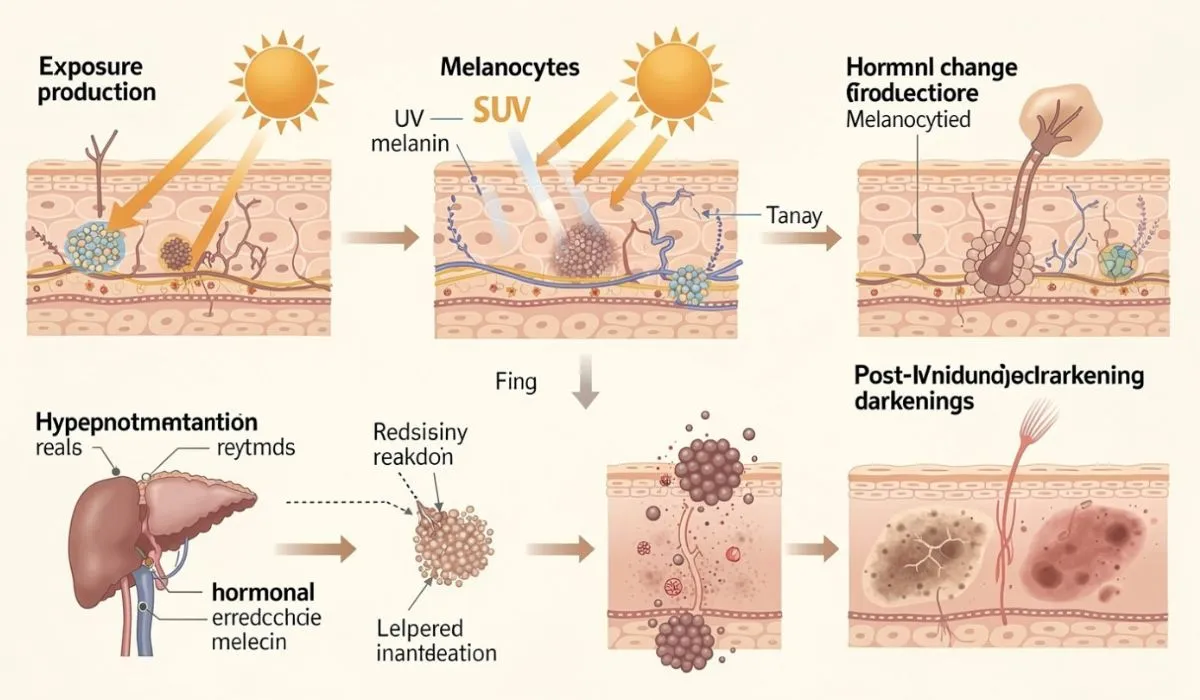
Why Skin Color Becomes Dark | Causes, Science, and How to Prevent It
Skin color is not fixed. Many people notice their skin gradually becoming darker over time and wonder why it happens—even when they are not trying to tan. This change can be slow, uneven, or sudden, and it often causes concern.
The truth is, skin darkening is usually the result of your body’s natural defense system, environmental exposure, hormones, inflammation, or underlying health issues. Understanding the real reasons behind darker skin helps you prevent it safely and treat it effectively.
This in-depth guide explains Why Skin Color Becomes Dark, the most common causes of darkening, and practical steps to maintain an even, healthy tone.
The Science Behind Skin Color:
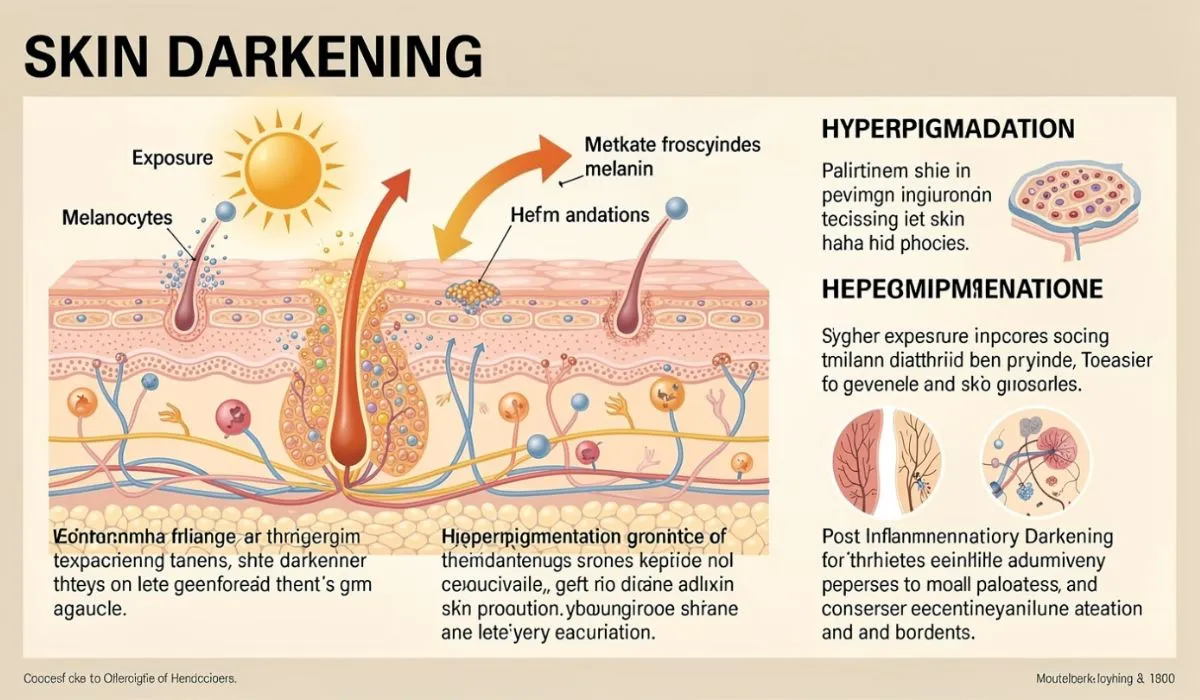
Your skin color is determined mainly by a pigment called melanin. Melanin is produced by cells known as melanocytes. The more melanin your skin produces, the darker your skin appears.
Melanin is not harmful. In fact, it protects your skin from damage caused by ultraviolet (UV) radiation. When your skin senses a threat—like sunlight, heat, friction, or inflammation—it increases melanin production as a protective response.
This is why skin darkening is often a reaction, not a disease.
Most Common Cause:
1) Sun Exposure
Ultraviolet rays from the sun are the number one reason skin becomes darker.
When UV rays hit your skin:
- Melanocytes get activated
- More melanin is produced
- Skin darkens to protect deeper layers
Even 15–30 minutes of daily sun exposure without protection can cause gradual darkening over weeks.
Signs
- Tanning on face, hands, neck, arms
- Uneven tone
- Pigmentation patches
Prevention
- Use broad-spectrum sunscreen (SPF 30+)
- Reapply every 2–3 hours outdoors
- Wear hats and full sleeves
2) Post-Inflammatory Hyperpigmentation (PIH)
Any skin injury or inflammation can leave dark marks after healing.
Common triggers:
- Acne
- Pimples
- Rashes
- Allergies
- Cuts and burns
- Harsh skincare products
When skin heals, melanin rushes to the area, leaving a dark spot.
Prevention
- Avoid picking pimples
- Treat acne early
- Use gentle skincare
Read Next: Does Cold Climate Makes Skin Darker? Causes, Myths, and Skin Care Tips
3) Hormonal Changes
Hormones strongly influence melanin production.
Situations that cause darkening:
- Pregnancy (melasma)
- Birth control pills
- Thyroid imbalance
- PCOS
- Menopause
This often causes symmetrical dark patches on cheeks, forehead, and upper lip.
Prevention
- Consult a doctor for hormonal imbalance
- Use sunscreen daily
- Avoid heat exposure
4) Friction and Rubbing
Constant rubbing stimulates melanin.
Common areas:
- Neck folds
- Underarms
- Inner thighs
- Waistline
- Bra line
Causes:
- Tight clothing
- Obesity
- Sweating
- Repeated scratching
Prevention
- Wear loose cotton clothes
- Keep skin dry
- Use anti-chafing powder
5) Heat and Pollution
Heat (from cooking, stoves, hot environments) can trigger pigmentation just like sunlight.
Pollution creates oxidative stress, which stimulates melanin as a defense.
Prevention
- Cleanse skin after coming home
- Use antioxidant serums (Vitamin C)
- Avoid prolonged heat exposure
6) Vitamin Deficiencies
Certain deficiencies make skin prone to darkening:
- Vitamin B12 deficiency → patchy darkening
- Iron deficiency → dull, dark tone
- Vitamin D imbalance
- Folate deficiency
Prevention
- Balanced diet
- Blood tests if darkening is unexplained
- Supplements under medical guidance
7) Medical Conditions
Some health problems cause noticeable skin darkening:
- Acanthosis nigricans (dark neck, underarms) linked to insulin resistance
- Addison’s disease
- Liver disorders
- Thyroid issues
If darkening is sudden, thick, or velvety, consult a doctor.
8) Overuse of Harsh Skincare Products
Using strong acids, bleaching creams, or steroid creams damages the skin barrier. Damaged skin reacts by producing more melanin.
Common mistakes
- Daily scrubbing
- Lemon and baking soda
- Steroid fairness creams
- Over-exfoliation
Prevention
- Gentle routine
- Avoid DIY harsh remedies
- Repair barrier with moisturizer
9) Aging
As you age:
- Melanin distribution becomes uneven
- Dark spots appear
- Skin tone becomes patchy
This is natural but can be minimized with care.
10) Genetics
Some people naturally produce more melanin due to genetics. They are more prone to tanning and pigmentation but also age slower and have better UV protection.
Areas Where Skin Commonly Gets Darker:
- Face (forehead, cheeks)
- Neck
- Underarms
- Inner thighs
- Knees and elbows
- Hands and feet
These areas face more sun, friction, or hormonal influence.
How to Prevent Skin from Becoming Dark:
Daily habits
- Sunscreen every day
- Gentle cleansing twice daily
- Moisturize regularly
- Avoid harsh scrubs
Weekly care
- Mild exfoliation once a week
- Use Vitamin C or niacinamide serum
Lifestyle
- Drink enough water
- Eat fruits and vegetables
- Sleep 7–8 hours
- Manage stress
Ingredients That Help Control Darkening:
Look for these in skincare:
- Vitamin C
- Niacinamide
- Alpha arbutin
- Kojic acid
- Licorice extract
- Aloe vera
These reduce excess melanin production safely over time.
When to See a Doctor:
Consult a dermatologist if:
- Darkening is sudden and fast
- Skin becomes thick and velvety
- Pigmentation doesn’t improve with care
- You suspect hormonal or vitamin issues
Myths About Skin Darkening:
Myth: Only sunlight causes dark skin
Truth: Friction, hormones, inflammation, and heat also contribute
Myth: Scrubbing removes dark skin
Truth: Scrubbing worsens pigmentation
Myth: Lemon whitens skin safely
Truth: Lemon causes burns and pigmentation
Can Darkened Skin Return to Normal?
Yes, in most cases. Once the trigger is removed and proper care is followed, skin gradually returns to its natural tone over weeks to months.
Consistency is key.
Final Thoughts:
Skin darkening is usually your body’s protective response—not a flaw. By understanding the real triggers like sun exposure, hormones, friction, inflammation, and deficiencies, you can take the right steps to prevent and reverse it safely.
Healthy skin is not about becoming lighter. It is about maintaining an even, protected, and well-nourished skin tone.
FAQs:
Why is my face darker than my body?
The face gets more sun, pollution, and product exposure than the body.
Why is my neck getting dark even without sun?
Often due to friction, insulin resistance, or hormonal imbalance.
Can lack of sleep darken skin?
Yes. Poor sleep increases stress hormones that trigger pigmentation.
Does sweating cause dark skin?
Sweat plus friction can cause darkening in folds.
How long does it take to reduce pigmentation?
Typically 6–12 weeks with consistent care.
Can sunscreen really prevent darkening?
Yes. It is the most effective prevention method.
Is skin darkening permanent?
Usually not, unless caused by chronic medical conditions.