
When to Apply Sunscreen Before or After Serum | Learn More About
Applying sunscreen correctly is essential for protecting your skin from harmful UV rays. While some people believe serum should go last, the truth depends on your skin type and product formulation.
For most people, applying sunscreen after serum ensures proper absorption and effectiveness.
This article breaks down When to Apply Sunscreen Before or After Serum to help you build a safe, effective daily skincare routine.
When to Apply Sunscreen Before or After Serum:
- The correct order of application: Serum first, then sunscreen. This allows serums to absorb fully and work effectively before sunscreen creates a protective barrier.
- SPF in sunscreen matters: Use a broad-spectrum sunscreen with at least SPF 30 every day, even if you’re indoors or on cloudy days.
- Layering thick products first: If using a heavy serum like retinol, apply it first so it has time to penetrate without being blocked by sunscreen.
- Chemical vs. physical sunscreens: Chemical sunscreens may be layered under makeup, but physical (mineral) sunscreens are often used as the final step for added protection.
- Reapply throughout the day: Reapply sunscreen every two hours, especially if you’re sweating or spending time outdoors.
- Consider your skin concerns: Oily skin may benefit from lighter serums applied before sunscreen, while dry skin might need hydrating layers first.
📑 Table of Contents
- Understanding the Importance of Sunscreen in Your Skincare Routine
- The Science Behind Skin Absorption and Product Layering
- When to Apply Sunscreen Before Serum (Rare Cases)
- Step-by-Step Guide: Building Your Ideal Morning Skincare Routine
- Common Mistakes People Make with Sunscreen Application
- Special Considerations: Antioxidants, Retinoids, and Sunscreen
- Conclusion: Protect Your Skin, Inside and Out
Understanding the Importance of Sunscreen in Your Skincare Routine
Your skincare routine is more than just looking good—it’s about keeping your skin healthy and youthful over time. Among all the steps, one stands out as non-negotiable: sunscreen. No matter your age, skin tone, or climate, UV exposure is a leading cause of premature aging, dark spots, and even skin cancer. That’s why experts agree that sunscreen should be the last step in your morning routine.
But here’s where things get tricky: when to apply sunscreen before or after serum? The confusion arises because both products are crucial, yet they serve different purposes. Serums deliver concentrated ingredients deep into the skin, while sunscreen acts as a shield against environmental damage. Getting the order right ensures both products work their best.
In this article, we’ll walk you through the science, practical tips, and common mistakes so you can master your routine with confidence.
The Science Behind Skin Absorption and Product Layering

Visual guide about When to Apply Sunscreen Before or After Serum
Image source: coola.com
Your skin is made up of multiple layers, and each product you apply interacts with them differently. When you apply a serum, it’s designed to penetrate the epidermis—the top layer of your skin—to target specific concerns like hyperpigmentation, hydration, or elasticity. These active ingredients need time and space to work without interference.
Sunscreen, on the other hand, forms a protective film on the skin’s surface. It sits on top and reflects or absorbs UV rays before they can damage deeper layers. If you apply sunscreen first, it can block the serum’s penetration, reducing its effectiveness. Think of it like putting a lid on a jar before pouring soup inside—nothing gets in, and nothing gets out.
That’s why dermatologists almost universally recommend applying serum before sunscreen. It allows the active ingredients in your serum to do their job without being shielded from the sun’s harmful effects.
How Product Texture Affects Application Order
Not all serums and sunscreens are created equal. Thicker serums, such as those containing hyaluronic acid or vitamin C, may feel sticky or oily. In these cases, it’s still best to apply them first. However, if you’re using a lightweight gel serum, it can absorb quickly and create a smooth base for sunscreen.
On the flip side, some sunscreens—especially mineral-based ones—can leave a white cast or feel heavy. If you’re layering makeup afterward, you’ll want to ensure the sunscreen fully absorbs first. This means giving it a few minutes between serum and sunscreen application.
A helpful tip: Apply serums in order of consistency—from thinnest to thickest. Then finish with sunscreen. This mimics how your skin naturally absorbs products, ensuring maximum benefit.
When to Apply Sunscreen Before Serum (Rare Cases)
Visual guide about When to Apply Sunscreen Before or After Serum
Image source: cdn.mos.cms.futurecdn.net
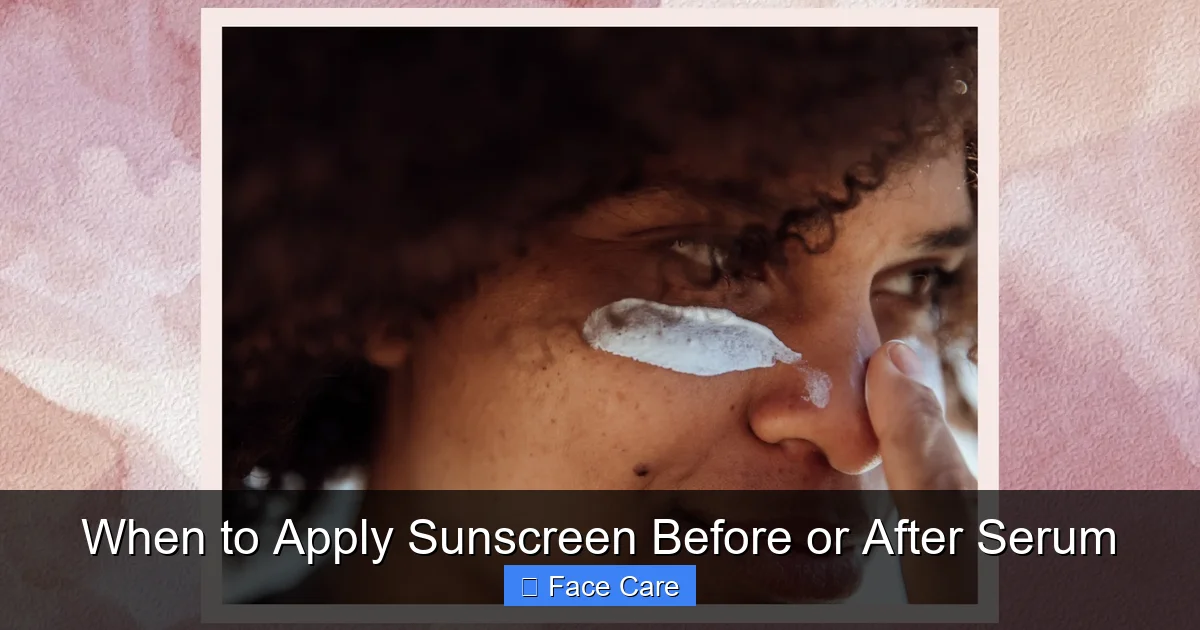
While most skincare experts agree that serum should come before sunscreen, there are exceptions. These situations are rare and usually involve specific formulations or personal preferences.
One example is when using a physical sunscreen as a primer. Some people prefer to apply a thin layer of zinc oxide-based sunscreen before moisturizer and serum to create a barrier against pollution or sweat. In this case, the sunscreen acts more like a base than a topcoat.
Another scenario is using a serum with strong exfoliating properties, like those containing high concentrations of glycolic acid. These can sometimes irritate the skin when exposed to sunlight immediately after application. In such cases, waiting 15–20 minutes after applying the serum before adding sunscreen may reduce sensitivity.
However, even in these edge cases, the general rule remains: sunscreen should always be the final layer in your morning routine. The only exception is if your serum contains ingredients that require a buffer (like certain acids), and even then, a small wait time is recommended rather than reversing the order.
Common Misconceptions About Sunscreen and Serum
Many people assume that since sunscreen protects the skin, it should go first. But that logic doesn’t account for how skincare products interact. Another myth is that you don’t need sunscreen if you’re using vitamin C serum—but vitamin C actually increases photosensitivity, making sunscreen even more critical.
Some also believe that applying serum after sunscreen won’t make a difference. However, research shows that sunscreen can reduce serum absorption by up to 30%. That means your expensive anti-aging formula might not be working as hard as it could.
Step-by-Step Guide: Building Your Ideal Morning Skincare Routine

Visual guide about When to Apply Sunscreen Before or After Serum
Image source: lovekinship.com
Creating an effective routine doesn’t have to be complicated. Here’s a simple, science-backed approach:
Step 1: Cleanse
Start with a gentle cleanser to remove dirt, oil, and makeup. Pat your face dry—don’t rub.
Step 2: Tone (Optional)
Use a hydrating toner to balance your skin’s pH. Skip this if your skin feels tight or sensitive.
Step 3: Treat with Serum
Apply your serum—whether it’s for hydration, brightening, or anti-aging. Allow it to absorb for about 60 seconds.
Step 4: Moisturize
Follow with a lightweight moisturizer. This locks in moisture and helps with serum absorption.
Step 5: Apply Sunscreen
This is the most important step. Use enough to cover your face and neck—about a nickel-sized amount for the face. Don’t forget your ears, forehead, and the back of your neck.
Step 6: Finish with Makeup (Optional)
If you wear makeup, apply foundation or powder on top of the sunscreen. Look for formulas labeled “broad-spectrum” and “non-comedogenic.”
Tips for Different Skin Types
- Oily/Acne-Prone Skin: Use a lightweight, oil-free serum and a mattifying sunscreen. Apply serum first to avoid clogging pores.
- Dry Skin: Choose a hydrating serum with hyaluronic acid, followed by a rich moisturizer and a creamy sunscreen.
- Sensitive Skin: Opt for fragrance-free, mineral-based sunscreen. Apply it last to avoid irritation from other products.
- Mature Skin: Use antioxidant serums (like vitamin C or E) before sunscreen to boost collagen and fight free radicals.
Common Mistakes People Make with Sunscreen Application
Even experienced skincare lovers can slip up. Here are the most frequent errors:
Not Using Enough Sunscreen: Many people use far less than they think. A dime-sized amount isn’t enough for your whole face. Aim for two finger-length strips from fingertip to middle knuckle.
Skipping Application on Cloudy Days: UV rays pass through clouds. Indoor lighting can also contribute to skin damage, especially with blue light exposure.
Applying Sunscreen Right Before Going Outside: Sunscreen needs 15–20 minutes to bind to your skin and become effective. Always apply it in the morning, not at the last minute.
Wearing Expired Sunscreen: Check the expiration date. Expired sunscreen loses its effectiveness and can even cause breakouts.
Reapplying Too Late or Too Infrequently: If you’re outside for more than two hours, reapply sunscreen. Sweat, towels, and swimming all reduce protection.
How to Tell if Your Sunscreen Is Working
You won’t see immediate results, but over time, proper sunscreen use leads to:
– Fewer fine lines and wrinkles
– More even skin tone
– Reduced risk of sunburn and long-term damage
If you notice dark spots fading or your skin feeling firmer, it’s a sign your routine is working.
Special Considerations: Antioxidants, Retinoids, and Sunscreen
If you’re using powerful ingredients like retinol or high-dose vitamin C, the importance of proper sunscreen application becomes even greater.
Retinoids increase skin cell turnover, making your skin more sensitive to the sun. Without sunscreen, you risk redness, peeling, and hyperpigmentation. Always apply retinol at night and follow your morning routine with a broad-spectrum sunscreen.
Similarly, vitamin C serums protect against free radicals caused by UV exposure. But because they can make skin more reactive, pairing them with sunscreen is essential. Again, apply the serum first, let it absorb, then seal everything with sunscreen.
Can You Wear Serum Over Sunscreen?
Technically, yes—but it defeats the purpose. Once sunscreen is on, adding serum on top blocks UV protection. If you’re using a nighttime serum, apply it before bedtime, not in the morning.
For daytime routines, always prioritize protection. Your skin will thank you later.
Conclusion: Protect Your Skin, Inside and Out
Knowing when to apply sunscreen before or after serum isn’t just about following a trend—it’s about protecting your skin’s health and longevity. The correct order—serum first, sunscreen last—ensures that both products work together harmoniously.
Remember: no amount of expensive serum can fix sun damage. But consistent sunscreen use? That can prevent it. Whether you have dry, oily, or combination skin, the principles remain the same. Cleanse, treat, moisturize, and protect.
Make sunscreen your non-negotiable habit. Your future self will thank you with smoother, brighter, healthier skin.
Frequently Asked Questions
Should I apply sunscreen before or after my vitamin C serum?
Always apply your vitamin C serum first, then wait about a minute for it to absorb. Follow with sunscreen. Vitamin C increases photosensitivity, so protecting your skin with sunscreen afterward is essential for safety and effectiveness.
Can I skip sunscreen if I’m using a moisturizer with SPF?
No. Most moisturizers with SPF offer lower protection (around SPF 15) and don’t provide full coverage. For optimal defense, use a dedicated broad-spectrum sunscreen with SPF 30 or higher as the final step in your routine.
Is it okay to apply sunscreen over makeup?
Yes, but only if you’re reapplying during the day. Use a setting spray with SPF or carry a compact sunscreen. Avoid applying regular sunscreen over makeup, as it can streak or cake. Instead, apply it before foundation.
How long should I wait between serum and sunscreen?
Wait about 60 seconds after applying serum and moisturizer before applying sunscreen. This allows time for absorption and prevents pilling. Don’t rush—patience pays off in better results.
Does sunscreen reduce serum absorption?
Yes. Studies show that sunscreen can reduce the absorption of topical active ingredients by up to 30%. Applying sunscreen first creates a barrier that limits how deeply your serum penetrates the skin.
What if I have very dry skin—should I change the order?
No. Even with dry skin, serum should come before sunscreen. Use a hydrating serum with ingredients like hyaluronic acid, followed by a rich moisturizer, then a creamy sunscreen. The key is layering properly, not changing the order.