Difference Between Allergic Shiners And Dark Circles | Causes, Signs, and Treatments
Dark discoloration under the eyes is a common concern, but not all under-eye darkness is the same. Two conditions that look similar at a glance—allergic shiners and dark circles—have very different root causes, timelines, and treatments. Misidentifying them often leads to ineffective remedies and frustration.
This evidence-based guide explains how to tell them apart, why they occur, and what actually works to improve each condition.
What Are Allergic Shiners?
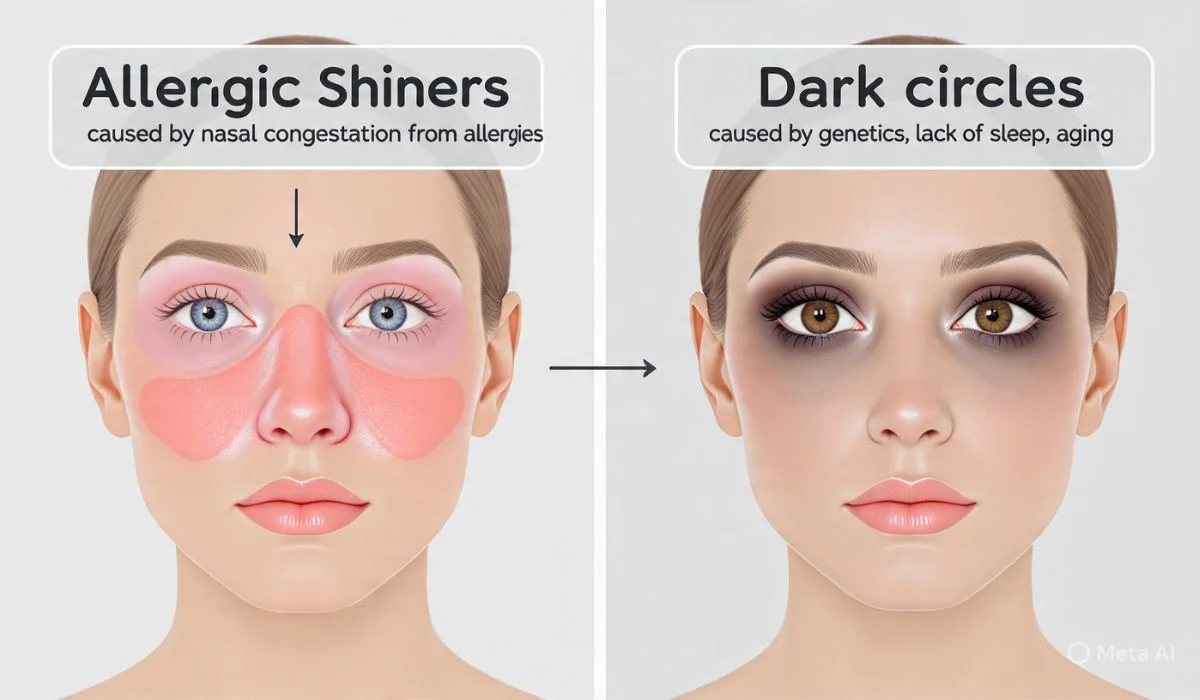
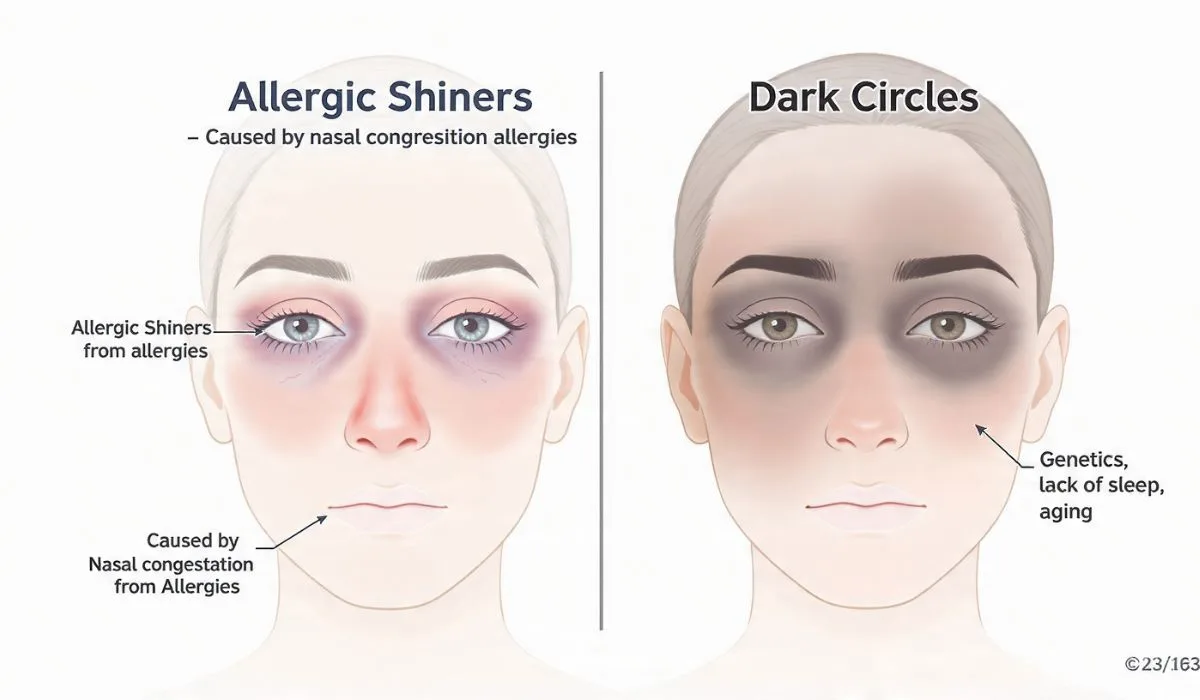
Allergic shiners are dark, bluish-purple shadows under the eyes caused by nasal congestion from allergies. When nasal passages are inflamed, blood flow from the veins around the eyes slows down. The pooled, deoxygenated blood creates a dusky discoloration beneath the thin under-eye skin.
They are a symptom of allergic rhinitis, not a skin problem.
Common triggers include pollen, dust mites, pet dander, mold, and seasonal allergens.
What Are Dark Circles?
Periorbital dark circles refer to under-eye darkness caused by pigmentation, thinning skin, genetics, aging, lifestyle, or fatigue. Unlike allergic shiners, dark circles are primarily a dermatological and structural issue rather than a vascular one linked to nasal congestion.
They may appear brown, gray, or shadowed depending on the cause and skin tone.
Root Cause: Vascular vs Pigmentary:
The biggest difference lies in what’s happening beneath the skin.
| Factor | Allergic Shiners | Dark Circles |
|---|---|---|
| Primary cause | Nasal congestion from allergies | Pigment, thinning skin, genetics |
| Mechanism | Slowed venous blood flow | Melanin, shadowing, skin changes |
| Color | Bluish, purple | Brown, gray, black |
| Onset | During allergy flare-ups | Gradual, chronic |
| Improves with | Allergy treatment | Skincare, sleep, lifestyle |
Why Allergies Cause Under-Eye Darkness:
In Allergic rhinitis, histamine release inflames nasal tissues. This swelling compresses nearby veins that drain blood from the eye area. Blood pools under the eyes, creating the signature bluish tint.
You’ll often see allergic shiners along with:
- Sneezing
- Itchy eyes
- Runny or blocked nose
- Mouth breathing
- Puffy eyelids
Why Dark Circles Develop:
Dark circles form due to multiple overlapping factors:
- Genetics and family history
- Lack of sleep
- Dehydration
- Sun exposure and pigmentation
- Aging and collagen loss
- Eye rubbing
- Nutritional deficiencies
These causes affect the skin structure and pigment, not the blood vessels.
Visual Differences You Can Notice:
Allergic shiners:
- Bluish or purplish tone
- Puffy lower eyelids
- Accompanied by allergy symptoms
- More common in children and allergy sufferers
- Fluctuate with seasons
Dark circles:
- Brown or gray tone
- Hollow or sunken appearance
- No nasal symptoms
- Persist year-round
- Common with aging
The “Press Test” to Tell the Difference:
Gently press the dark area under your eye.
- If the color fades temporarily, it’s likely vascular (allergic shiners).
- If the color remains, it’s likely pigmentation (dark circles).
Age Group Patterns:
Allergic shiners are especially common in children with chronic allergies. Dark circles are more common in adults due to lifestyle and aging.
Treatment Approach Is Completely Different:
Treating allergic shiners with eye creams won’t work. Treating dark circles with allergy medicine won’t work.
For Allergic Shiners
- Antihistamines
- Nasal sprays
- Allergen avoidance
- Air purifiers
- Treating sinus congestion
For Dark Circles
- Retinol and vitamin C creams
- Sunscreen
- Proper sleep
- Hydration
- Under-eye moisturizers
Role of Eye Rubbing:
Frequent eye rubbing from itchiness (common in allergies) can worsen both conditions:
- In allergic shiners, it increases inflammation.
- In dark circles, it increases pigmentation.
Seasonal Pattern:
If under-eye darkness worsens in spring or dusty environments, allergies are likely the cause.
If it remains constant regardless of season, it’s likely dark circles.
Can You Have Both at the Same Time?
Yes. Many people with allergies also develop pigmentation from chronic rubbing and inflammation. This creates a mix of vascular and pigmentary darkness.
Medical Diagnosis:
Doctors may diagnose allergic shiners based on allergy history and nasal symptoms. Dark circles are diagnosed visually based on pigmentation and skin thinning.
Best Skincare vs Best Allergy Care:
| Concern | What Helps Most |
|---|---|
| Allergic shiners | Allergy control, cold compress |
| Dark circles | Brightening creams, sleep, sunscreen |
When to See a Doctor:
Consult a doctor if:
- Darkness is paired with chronic sneezing and congestion
- Child has persistent under-eye shadows
- Eye area is swollen and itchy
See a dermatologist if:
- Darkness is pigment-related
- You notice skin thinning and hollowness
- Home remedies don’t work
Practical Home Care Tips:
For allergic shiners:
- Use saline nasal rinse
- Sleep with head elevated
- Apply cold compress
For dark circles:
- Use caffeine or vitamin C eye serum
- Avoid sun without sunscreen
- Improve sleep quality
Final Takeaway:
Allergic shiners and dark circles may look alike, but their causes are very different. Allergic shiners come from nasal congestion and blood pooling, while dark circles stem from pigmentation, aging, and lifestyle.
Correct identification is the key to effective treatment. If your under-eye darkness comes with allergy symptoms, treat the allergies. If it’s persistent without nasal issues, focus on skincare and lifestyle changes.
Next: Medications That Cause Dark Circles
FAQs:
1. What are allergic shiners?
Allergic shiners are bluish-purple shadows under the eyes caused by nasal congestion and slowed venous blood flow during allergies.
2. What are dark circles under the eyes?
Periorbital dark circles are brown/gray under-eye discolorations linked to pigmentation, thinning skin, genetics, aging, or lifestyle factors.
3. How can I tell if my under-eye darkness is from allergies or pigmentation?
Try the press test: if the color fades when you press gently, it’s likely vascular (allergic shiners). If it stays, it’s likely pigment (dark circles).
4. Do allergic shiners come with other symptoms?
Yes. They usually appear with sneezing, itchy eyes, runny/blocked nose, and puffy eyelids due to Allergic rhinitis.
5. Are allergic shiners more common in children?
Yes. Children with chronic allergies frequently develop allergic shiners, especially during seasonal flare-ups.
6. Can lack of sleep cause allergic shiners?
No. Lack of sleep contributes to dark circles, not allergic shiners, which are driven by nasal congestion.
7. Will eye creams remove allergic shiners?
Usually not. Treating the underlying allergy is more effective than topical creams for this condition.
8. Can you have both allergic shiners and dark circles at the same time?
Yes. Chronic allergies plus rubbing or pigmentation can create a mixed appearance.
9. Do allergic shiners change with seasons?
Often yes. They may worsen during high-allergen seasons like spring or in dusty environments.
10. When should I see a doctor?
If under-eye darkness is paired with ongoing nasal symptoms, swelling, or itchiness, seek medical advice for proper allergy management.